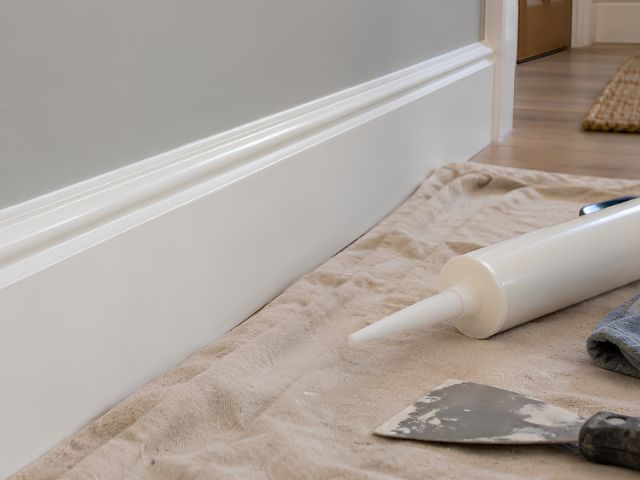
Wall panelling can give interior spaces a clean finish, but even well-cut panels can leave small gaps at edges, corners and junctions. Decorators caulk helps close these gaps before painting, creating a smoother transition between panels and surrounding surfaces when used in the right areas.
Decorators caulk and wall panelling
Decorators caulk is commonly used as a finishing material for internal decorating work. In wall panelling projects, it helps fill small gaps where panels meet adjacent surfaces, such as walls, ceilings, skirting boards or window surrounds. These junctions can be difficult to finish with paint alone, especially where slight movement, uneven plaster or small installation tolerances are present.
For professionals, the goal is creating a clean, paint-ready joint that supports the overall quality of the finish – not simply hiding a gap. White decorators caulk provides a clear base for painting and highlights where tooling is needed before final finishing.
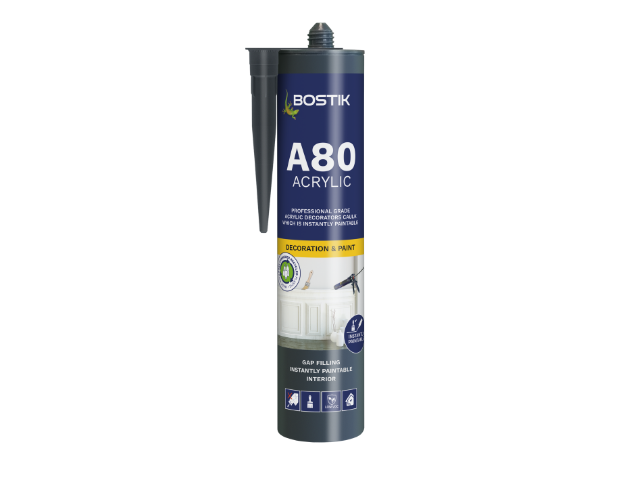
A product such as Bostik A80 Acrylic is an example of a professional-grade decorators caulk designed for interior gap filling. It is suitable for joints between common building surfaces and can also be used to fill screw and nail holes in walls and ceilings made from materials such as wood, plaster, gypsum and concrete.
Can you use decorators caulk for panelling?
Yes, decorators caulk can be used for panelling when the aim is to finish small internal gaps before painting. It is particularly useful where decorative panels meet walls, ceilings, skirtings or other fixed interior elements. These areas often need a flexible decorators caulk that can be applied neatly, smoothed easily and painted over as part of the final decorating stage.
The key is to use it in the right type of joint. Decorators caulk is suited to finishing gaps and small cracks, rather than bonding panels in place or filling large voids. For example, it can help close fine lines around panel edges, cover small imperfections at mitred corners or act as a crack filler for walls where minor surface gaps remain after installation.
It's also worth checking the application environment — acrylic decorators caulk is typically used indoors.
Applying decorators caulk around panels
Good preparation is the difference between a quick touch-up and a finish that looks deliberate. Before applying decorators caulk around wall panels, check that the joint surfaces are clean, sound and free from dust, loose material or contaminants that could reduce adhesion. Work in suitable, well-ventilated conditions and check that the temperature is within the product’s recommended application range.
- Prepare the joint: Check that the joint surfaces are clean, sound and free from dust, loose material or contaminants that could reduce adhesion.
- Cut the nozzle: For a neat bead, cut the cartridge nozzle at a 45-degree angle to match the width of the gap. This helps control the flow and reduces excess caulk on the panel or wall.
- Apply the caulk: Place the nozzle at the start of the gap and apply steady pressure, keeping the decorators caulk in contact with both sides of the joint.
- Use masking tape where needed: Masking tape can be useful where the painted finish needs to be especially crisp, such as along panel mouldings or visible vertical joints. Apply the tape before caulking, leaving only the joint exposed.
- Tool the bead: Once applied, smooth the decorators caulk within its working time using a wet, round-ended tool. Avoid using a wetted finger, as this can leave an uneven profile and may affect the finish.
- Clean and remove tape: Remove excess material with a damp cloth, then take away the masking tape before the decorators caulk skins over.
Getting a neat paint-ready finish
A smooth finish depends on timing. Once the bead has been shaped, avoid overworking it, as repeated smoothing can pull material out of the joint or leave drag marks. Work within the caulk's working time to achieve the best result.
Instantly paintable decorators caulk skins over quickly – typically within a few minutes – allowing you to paint once the surface feels dry. Full cure develops gradually, generally taking approximately one day per millimetre of joint depth.
Before painting, test paint compatibility on a small area first – especially on wider joints, where paint performance can vary. Once confirmed, follow the paint manufacturer's instructions. For small interior gaps around panelling, a correctly applied white decorators caulk provides a clean base for the final coat.
The best results come from matching the product to the joint, preparing the surface properly and tooling the bead before it skins. For interior panelling, decorators caulk is a practical way to close small gaps and create a smoother painted finish.
Used with care, it helps turn panel edges, corners and junctions into clean details that support the overall quality of the job.
Related articles
Stay aware about our latest innovation and our latest news and sponsoring actions