
Jul 1, 2026 - 3-5 Minutes
How Adhesives Improve EOL Packaging Performance and Throughput
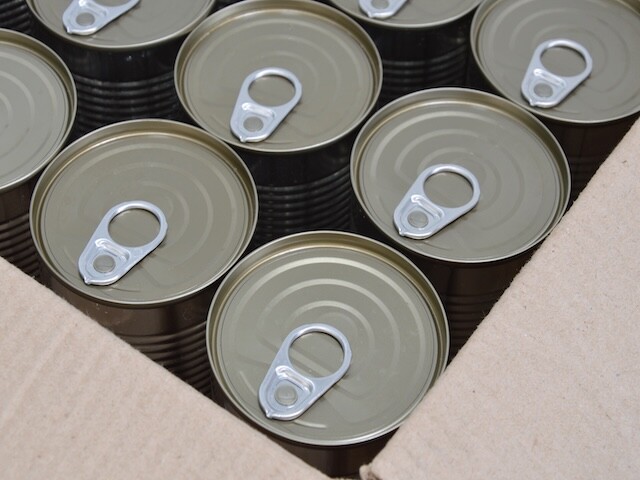
Learn how end-of-line packaging adhesives improve case and carton sealing and protect food and beverage products during shipping.
As you likely know, end-of-line (EOL) packaging for food and beverage manufacturing can be often overlooked in the industry. This is because brands tend to focus more on upstream processes (filling, capping and labeling), as these steps are seen as directly impacting perceived quality and brand presentation.
However, when end-of-line packaging issues arise, such as cases opening or package deformation, it can still negatively impact those elements.
Therefore, it is good to understand the role adhesives play in EOL packaging outcomes so you can avoid those issues and how the right EOL packaging adhesives, such as the Kizen™ adhesives portfolio, can help.
How Adhesives Impact Package Quality
Elevated Temperatures
Many food products including sauces, oils, processed cheeses and hot‑filled beverages such as juices, teas and sports drinks are placed into cases and cartons while still warm from filling. This is to support hygienic processing, reduce condensation and maintain production efficiency.
Although the packaged products may later cool, EOL packaging frequently occurs before product temperatures return to ambient levels to avoid slowing line speeds or adding cooling dwell time. However, this creates a window during which cases and cartons may be closed, compressed, conveyed and palletized while internal product temperatures remain elevated.
During this period of elevated thermal exposure, adhesives can experience sustained heat while under mechanical stress, including compression and load bearing. If case and carton adhesives fail to build full strength quickly, soften or lose strength under these conditions, bond integrity can be compromised. This can increase the likelihood of flap openings, seal creep, deformation, leaks or product loss.
These failures are frequently discovered downstream because early‑stage softening may not be visually apparent during sealing. When identified, they can result in rework, scrapped product, unplanned downtime, delayed shipments or rejected loads, impacting retail quality and causing brand risk.
How the Right EOL Packaging Adhesives Can Help
To help maintain seal integrity during these operations, EOL adhesives must perform reliably under both elevated temperatures and mechanical handling stresses throughout compression, conveying and palletizing. Specifically, adhesive technologies designed for elevated‑temperature environments should provide:
- High bond strength and cohesion: This helps maintain seal integrity while cases are exposed to warm product loads and mechanical stress, therefore reducing the likelihood of package failure.
- Thermal performance: High‑performance adhesives are formulated to maintain bond strength under elevated application conditions, such as heat retained during early handling. This helps minimize adhesive softening, bond creep or seal deformation before products cool to ambient conditions.
- Hot tack and fast strength development: Hot tack refers to an adhesive’s ability to form an immediate bond while still molten, before it has fully cooled and set. This initial “grab” is critical in high‑speed packaging environments. When combined with fast strength development, it allows the adhesive to quickly transition from initial tack to full bond strength. Together, these properties help ensure cases remain sealed and stable during early handling stages, such as compression and conveying, even while the product and adhesive are still warm.
Premium or Coated Substrates
As brands invest in premium primary packaging to appeal to consumer preferences, EOL packaging must evolve in parallel. This often involves cases and cartons with:
-
Glossy, coated or varnished surfaces
- High‑quality printed corrugate
- Reinforced or specialty board grades
While these materials are intended to enhance shelf appearance, they can be more difficult to bond than traditional uncoated brown or kraft corrugate. Coatings, varnishes and high‑quality print finishes and certain specialty board grades can reduce surface porosity and create low surface energy (LSE) conditions or more sealed, uniform surfaces. This limits an adhesive’s ability to properly wet out and anchor to the substrate.
When adhesives are not formulated for these substrates, seals may develop inconsistently, achieving adequate strength in some areas while remaining weak in others. This variability increases the risk of case openings on conveyors, deformation during stacking, rework or failures during transportation and retail handling.
The compromised EOL packaging can also allow primary packages to shift or scuff inside the case, creating additional waste and brand‑presentation risk.
How the Right EOL Packaging Adhesives Can Help
To support evolving substrate designs, EOL adhesives must be capable of bonding to LSE materials and less porous materials under real production conditions (i.e. high line speeds, varying temperatures, compression forces and continuous equipment operation). These factors can influence how effectively an adhesive wets out and forms a consistent bond.
This requires adhesives that offer:
- Strong adhesion to coated, printed and specialty substrates, such as varnished or glossy cartons as well as reinforced or high‑density board grades, helping maintain seal integrity and reduce rework across premium packaging designs.
How Adhesives Impact Package Output
As you know, food and beverage operations typically run high volume, continuous production; this means EOL equipment, including case and carton sealers, must keep pace with upstream filling and primary packaging processes. If EOL sealing cannot match upstream speeds, it can lead to bottlenecks across the entire production system.
Adhesives can impact output when they exhibit:
- Slow strength development
- Inconsistent bead formation
- Stringing or char buildup
These limitations may force you to reduce throughput, extend run times or increase downtime to address issues. Over time, extended runs and repeated stoppages can cause your energy usage per case to rise or accelerate equipment wear and increase maintenance costs.
How the Right EOL Adhesives Can Help Support High‑Output Operations
To support high output demands, EOL adhesives must provide predictable equipment performance under continuous operation. This requires adhesives that possess:
- Rapid strength development: In high‑speed packaging environments, adhesives must build handling strength in a matter of seconds, to keep pace with modern line speeds. By helping cases reach sufficient bond strength almost immediately after application, adhesives can support continuous flow without slowing throughput. This reduces compression time, allowing for increased line speeds and case throughput while maintaining seal integrity.
- Stable viscosity and rheological consistency: This helps ensure predictable adhesive flow through application equipment, accurate bead placement, minimized stringing and consistent bonding throughout a production run.
- Thermal stability during continuous operation: When adhesives offer thermal stability, they can resist degradation inside application equipment and reduce char formation. This can minimize cleaning frequency and lower the risk of unplanned downtime.
- Broad substrate compatibility: Some adhesive technologies are designed to perform across a wide range of corrugate grades and surface finishes, from standard kraft to coated, printed or specialty substrates. This allows operations to use less adhesive SKUs, simplifying inventory management, reducing changeovers and supporting more efficient production.
How Kizen™ Adhesives Address Food and Beverage EOL Package Demands
Designed to help your food and beverage EOL packaging address key requirements, Bostik’s Kizen™ end‑of‑line packaging adhesive portfolio is structured to match adhesive technologies with specific thermal conditions, line speeds and substrate types. Kizen™ focuses on targeted solutions for distinct needs, helping you simplify selection, and maintain cost control while meeting demanding performance and production requirements.
The Kizen™ adhesives portfolio includes:
Kizen™ FORCE
As the foundational adhesive in the Kizen™ portfolio, Kizen™ FORCE is designed for general‑purpose case and carton sealing on standard corrugate substrates. It offers reliable multi‑substrate adhesion, consistent viscosity and predictable processing behavior. Kizen™ FORCE supports output‑focused operations by helping minimize stringing, maintain clean cutoff and promote stable application, making it suitable for environments where consistent sealing and equipment reliability are priorities. Common applications include uncoated brown or kraft corrugate cases used for bottled beverages, canned goods, dry foods and regular slotted containers (RSCs).
Kizen™ HEAT
Formulated for hot‑fill and warm‑pack applications, Kizen™ HEAT addresses elevated‑temperature challenges associated with sauces, beverages and other thermally demanding products. It is formulated to provide enhanced temperature resistance, fast strength development and thermal stability, helping maintain seal integrity during compression, conveying and palletizing while reducing the likelihood of adhesive softening and minimizing char‑related maintenance during extended runs.
Kizen™ PROS
Kizen™ PROS is designed to support premium and branded packaging initiatives, delivering optimized adhesion on challenging substrates such as glossy, varnished, metallized or other low‑surface‑energy materials. Additionally, Kizen™ PROS performs reliably on recycled corrugate, helping maintain seal consistency, package protection and line speed while incorporating more sustainable materials.
When selecting a Kizen™ adhesive solution, Bostik’s technical experts work directly with you to help ensure your chosen adhesive aligns with your specific EOL requirements. Our technical support includes:
- Trial testing and validation to achieve high performance under your production conditions
- Customized formulations to address specific thermal, speed or substrate requirements
- Line assessments to identify opportunities to reduce costs, improve efficiency and simplify adhesive usage
Are you looking to optimize EOL sealing performance across thermal exposure, challenging substrates and high line speeds? Contact a Bostik expert to learn how Kizen™ adhesives can help improve seal reliability, operational efficiency and throughput.
Other Relevant Content:
Kizen™ Packaging Adhesives
Discover Kizen™ Products
Kizen™ is a registered trademark of the Arkema Group.
©2026 Bostik, Inc. All Rights Reserved
All information contained herein is believed to be accurate as of the date of publication, is provided “as-is” and is subject to change without notice. To review our full U.S. Legal Disclaimer, visit: https://www.bostik.com/us/en_US/legal-disclaimer/