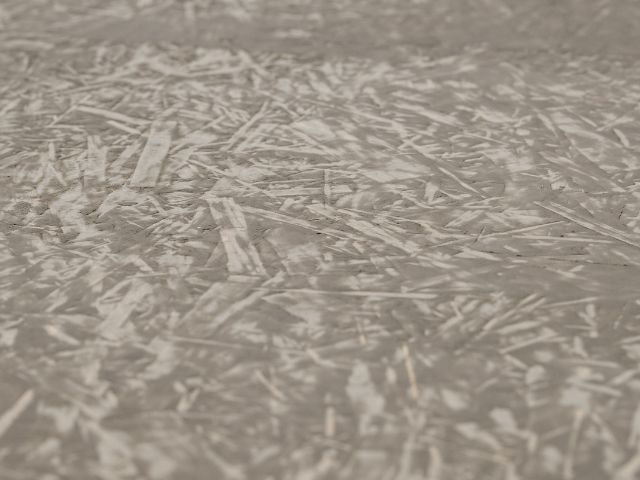
A bridging mesh is a practical solution to address cracks, joints, and changes in subfloor materials commonly encountered on construction sites. If not properly managed, these critical points can lead to floor covering failure, visible defects, or reduced durability over time. By reinforcing the substrate before the final flooring system is applied, bridging mesh helps create continuity across cracks and transitions, supporting a more reliable installation.
Why cracks and substrate changes create critical weak points
Cracks and joints are natural occurrences in most substrates, but they can quickly become critical weak points if left untreated. Even small cracks (below 0.3 mm) may seem harmless, yet wider cracks often require preparation and proper reinforcement to prevent further issues. Over time, movement, load, or environmental conditions can cause these areas to expand or reflect through the final floor covering.
Substrate changes add another layer of complexity. Transitions between materials such as concrete, screeds, tiles, or wood create zones with different mechanical behaviours. Each material responds differently to site conditions and structural stress. This creates tension at the interface between materials.
If these areas are not stabilised, the final floor covering may suffer. Poor adhesion or visible defects can appear, and the flooring system may not last as expected. Treating these zones early helps secure the performance of the whole installation.
What is a bridging mesh and how does it work
A bridging mesh is a fiberglass reinforcement fleece designed to stabilise cracks, joints, and transitions between different substrates. It creates a reinforced zone across cracks and transitions, which helps stabilise weak areas before flooring system is applied.
Solutions such as RENO U720 / U736 CONNECT serve this function. They offer very high tensile strength, which supports effective reinforcement of cracks and joints.
The mesh is embedded into a fresh layer of repair mortar. It is positioned perpendicular to the crack or joint to ensure proper load distribution. Once pressed into the material and fully encapsulated, it forms a reinforced zone that connects both sides of the substrate.
This method stabilises cracks and connects both sides of the substrate. It also supports continuity between different materials and reduces the need for more complex or expensive treatments.
Where and when to use bridging mesh on site
A bridging mesh is useful in many situations where the substrate shows discontinuity or instability. It applies to a wide range of materials such as concrete, cement screeds, tiles, terrazzo, natural stone, wood, or even metallic substrates. This versatility makes it a reliable solution when different materials meet or when existing substrates show defects.
It is typically used when cracks exceed 0.3 mm or when joints require reinforcement. In these cases, preparation is essential before applying the mesh. The crack or joint must be clean, free from dust, and, when needed, mechanically opened to ensure proper bonding of the repair system.
Bridging mesh also helps manage transitions between different substrate types. These areas often behave differently under site conditions, which increases the risk of tension or separation. The mesh acts as a stabilising layer that links both sides and limits the risk of movement affecting the final flooring.
This solution works in combination with repair mortars. Depending on the system used, it can also help avoid the use of repair resins. It provides a more controlled and consistent repair method compared to traditional approaches, while keeping the installation process straightforward on site.
Choosing the right format for efficient application
RENO U720 / U736 CONNECT is a fiberglass reinforcement fleece designed for crack and joint bridging across different substrates. It helps reinforce weak areas before the final flooring system is applied, with very high tensile strength and the ability to bridge and reinforce cracks, joints and changes in subfloor type.
The main difference is the format. BOSTIK RENO U720 CONNECT is supplied in a roll, so it can be cut to the size needed on site. This is useful when the crack or joint length varies, or when you need to adapt the fleece to the area being treated. BOSTIK RENO U736 CONNECT is supplied as ready-to-use pre-cut sheets of 0.8 m x 0.6 m, which makes handling faster for repeated repairs where a standard sheet size is suitable.
The choice depends on how the work is organised on site. The roll format offers flexibility in sizing, while the pre-cut sheet format supports faster placement thanks to its ready-to-use dimensions. Both formats are designed for the same type of crack, joint and substrate transition applications.
Key steps for a reliable crack bridging system
The substrate must be sound, dry, and free from dust, grease, or any material that could affect adhesion. Loose layers or residues must be removed before any application.
Crack and joint preparation comes next. Remove all debris, contamination and loose material from the area, then vacuum carefully so the crack or joint is dust free. When using the bridging mesh, the crack does not need to be opened. The focus should be on creating a clean, sound substrate so the repair mortar or resin can bond correctly before the mesh is embedded.
Prime the prepared substrate with a suitable primer before applying the repair mortar. Once the primer is ready for the next step, apply a thin and even layer of repair mortar at least 30 cm on both sides of the crack or joint. Place the bridging mesh perpendicular to the defect and press it along its full length to ensure proper contact. If several strips are required, maintain an overlap of 5 to 10 cm to ensure continuity. The mesh must be fully covered to create a stable reinforced layer.
Keep site conditions stable during application. Temperature must remain consistent, and underfloor heating systems must be switched off before, during, and after installation.
Following these steps helps secure a consistent result and prepares the substrate for the next stages of the flooring system.
Stabilising cracks and preparing substrates for flooring systems
A bridging mesh plays a key role in stabilising cracks and reinforcing transitions between different substrates before the installation of the flooring system. By connecting both sides of a crack or joint, it helps create a reinforced and continuous base for subsequent layers.
This reinforcement helps limit the impact of substrate discontinuities and provides a stable surface for the application of flooring systems. It also supports continuity between different materials, even where variations in behaviour may occur.
Using systems such as RENO U720/U736 CONNECT also helps simplify the repair process. Depending on the system used, it can reduce the need for certain resin-based repair methods, while remaining compatible with a wide range of substrates and installation systems.
For a complete approach to subfloor preparation and repair solutions, explore the dedicated resources available on the Bostik Academy.
Related articles
Discover articles that explain, educate, and inspire for better constructions