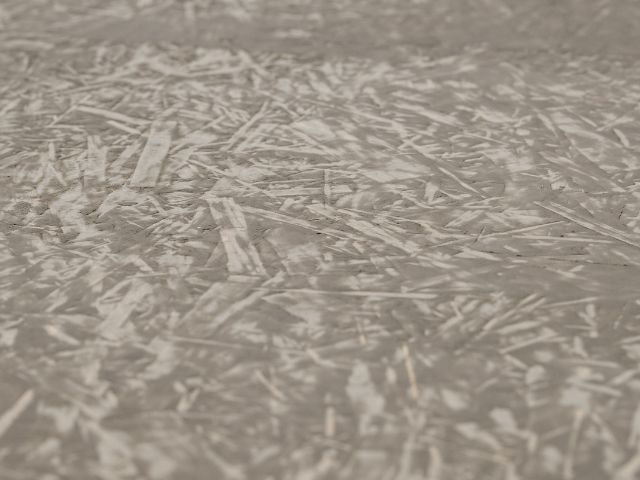
A decoupling membrane can help make flooring installation more reliable when the subfloor is weak or exposed to movement. Used as a stress-relieving underlay, it helps relieve tensions caused by tensile and shear movements while supporting stability during installation. This solution is suitable for parquet and different kinds of flooring installation, in new-build and renovation projects, and is compatible with underfloor heating systems.
Why subfloor movement can delay flooring installation
Subfloor movement can create tensions in the flooring build-up when the floor finish is installed directly. Tensile and shear movements create stress in the build-up, and that stress can affect stability during installation. On critical subfloors, this becomes even more important because the surface needs to provide a sound base before any flooring is installed. A decoupling membrane is used to deal with this challenge by helping to relieve these tensions, support a more stable installation and bring 11 dB sound reduction, making it ideal for floor renovations. This supports flooring installation with an underlay designed to relieve tensions and stabilise installation over critical subfloors.
How a stress relieving underlay supports a more stable result
A stress-relieving underlay plays a practical role in the flooring build-up. It helps manage movement in the substrate before the floor covering is installed, which supports a more stable base for the next step. For projects where time, handling and substrate condition all matter, this type of layer helps bring more control to the installation stage, especially on subfloors that need added support.
Relieving tensions from tensile and shear movements
RENO U750 FLEECE is designed as a flexible and breathable fibre fleece underlay for flooring installation. It relieves tensions caused by tensile and shear movements and helps ensure stability during hard floor covering installation. It also stabilises installation over critical subfloors, brings sound reduction and helps reduce stress in the substrate. Easy to cut and install, the underlay carries the EMICODE EC1 Plus 1 very low emission mark, which can support projects where indoor emissions are part of the product selection criteria. That makes it a relevant decoupling solution when the goal is to support direct flooring installation with a system that responds to movement in the substrate.
|
1 EC1 Plus |
|---|
| EMICODE EC1 Plus is a premium emission classification for installation and construction products. It identifies products with very low emissions, based on stricter limit values than EC1. In flooring projects, it helps professionals identify materials that can support indoor air quality requirements and low-emission specifications. |
Where a decoupling solution fits in flooring projects
A decoupling solution can be used across a wide range of subfloors such as concrete, calcium sulphate or cement screeds, mastic asphalt screeds, ceramic tiles, terrazzo, natural stone, wooden substrates and metallic substrates. This gives professionals a practical option when working on projects where the existing base can vary from one site to another. Used as a stress relieving underlay, it helps prepare the floor build-up for direct installation while supporting stability across both new-build and renovation work.
Direct installation for parquet floors
For parquet applications, RENO U750 FLEECE is suitable for hardwood floor installation as bonded solid or engineered parquet, as well as laminate flooring. The installation method starts with laying out the underlay perpendicular to the installation direction of the hardwood flooring and cutting it to size with scissors or a sharp knife. It is then bonded to the subfloor with an approved MS or PU adhesive. Once laid into the fresh adhesive bed and firmly rubbed in or rolled out, the hardwood floor installation can be ready after about 24 hours, depending on the adhesive used.
Direct installation for tile finishes
This decoupling underlay is also suitable for ceramic tiles, terrazzo and natural stones. For tiling installation, it is laid out on the floor, cut to size, then installed into a fast-setting C2 S1 tile adhesive, such as ARDAFLEX TURBO or ARDAFLEX XXL, or another approved Bostik tile adhesive, applied over the subfloor. The surface is rubbed in firmly, with particular care at the head and seam areas, then rubbed down again after about 20 minutes to secure full bonding. Depending on the adhesive used, tiling installation can be ready after about 24 hours. This makes it suitable for hard floor finishes such as ceramic tiles, terrazzo and natural stones.
What professionals should check before installation
Before installation starts, the substrate needs to be checked carefully. It should be sound, dry and free from anything that could affect adhesion. Dirt, oil, grease, loose residues and unstable layers all need to be removed so the underlay can be bonded onto a clean and suitable base.
Surface condition matters just as much as cleanliness. Dense or smooth areas, as well as metallic substrates, need proper preparation before the underlay is installed. Where the surface is weak or dusty, a solidification primer such as HYTEC P510 RENORAPID may be used before installation with an MS or PU adhesive. When the subfloor is uneven or not flat, it should first be levelled with a suitable primer and levelling compound.
Site conditions also need to stay steady during the work. The floor and air temperature should be maintained between +15°C and +30°C throughout application and drying. Keeping these conditions stable helps support the installation process from start to finish.
A practical option for renovation and heated floors
This type of underlay is suitable for both new-build and renovation projects in residential, commercial and industrial areas. That makes it useful on jobs where the existing subfloor is already part of the challenge and the flooring build-up needs a solution that can adapt to site conditions rather than rely on a single type of base.
It is also compatible with underfloor heating systems. For warm water systems, the heating must be switched off for 48 hours before application, during installation, and for at least 48 hours afterwards. After that, the temperature should be increased gradually until the system reaches normal operating level. This makes the underlay suitable for flooring projects where heated floors are part of the specification and the installation sequence needs to be handled with care.
A stress-relieving underlay that is easy to cut and install
When the subfloor needs to be managed before the finish goes down, the right underlay can help keep the flooring sequence on track. A decoupling membrane that is easy to cut and install, while also helping to relieve tensions and support stability, gives professionals a practical way to move from substrate preparation to direct floor installation with an underlay that relieves tensions and stabilizes installation over critical subfloors.
RENO U750 FLEECE fits this approach across parquet and tile applications, with use on a broad range of subfloors in both renovation and new-build work. Professionals looking at RENO U750 FLEECE as part of the floor build-up can also place it within the wider Bostik Academy approach, where flooring solutions are presented through application needs and site conditions rather than product choice alone.
Related articles
Discover articles that explain, educate, and inspire for better constructions