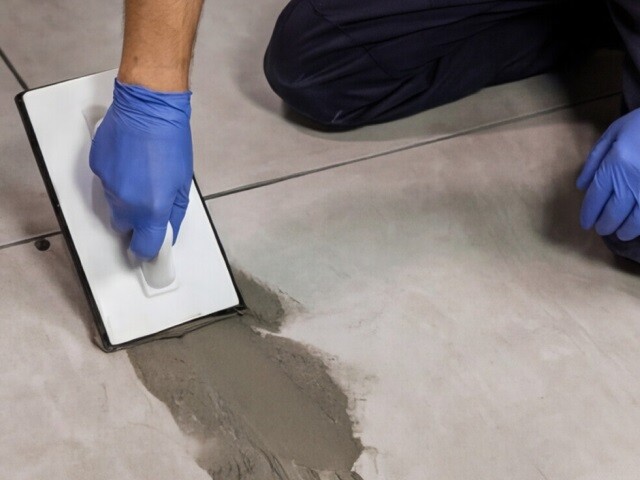
For contractors and experienced DIY enthusiasts who want a durable, waterproof and low-maintenance joint, epoxy grout is a smart choice. Epoxy offers a strong and long-lasting alternative, especially in places where standard cementitious grouts fall short, such as on patios or in areas subject to intensive (chemical) wear and tear.
What is an epoxy grout?
An epoxy grout is a two-component grout consisting of a resin (component A) and a hardener (component B). After mixing, a strong, waterproof and chemically resistant joint is created. Unlike traditional cement joints, epoxy does not absorb moisture and does not crumble under intensive use or extreme conditions.
Why choose epoxy grouting?
Professionals are increasingly choosing epoxy grouting because of its excellent technical properties:
- Waterproof: ideal for wet areas such as bathrooms and showers.
- Wear-resistant and chemically resistant: resistant to cleaning agents, acids and fats.
- Easy to maintain: thanks to the smooth and closed surface, dirt hardly sticks to it.
- Colourfast: no discolouration or contamination as with cement joints.
Is epoxy suitable as a grout in swimming pools?
Yes, epoxy is an excellent choice as a grout. The best choice depends on the specific application and conditions. Whether it is a saltwater swimming pool or a swimming pool with chlorinated water, epoxy offers a major advantage due to its excellent waterproofing and chemical resistance. Unlike other materials, epoxy retains its original appearance, even with regular cleaning with water or cleaning agents. Epoxy is resistant to limescale and does not effloresce.
For successful application, tailored advice from an experienced consultant is essential. This is because epoxy-based grout requires specific processing techniques.
Why use epoxy grout?
Advantages of epoxy grout
- Waterproof, mould-resistant and low-maintenance
- Wear-resistant and resistant to chemicals
- Ideal for wet areas and outdoor use
- Colourfast and dirt-repellent
Disadvantages of epoxy joint filler
- More difficult to process than cement joints
- More expensive
- Quick application requires experience
- Difficult to correct after curing
When should you choose epoxy grout?
Use an epoxy grout if the joint needs to be resistant to moisture, dirt and intensive use for a long period of time. For projects such as:
- Commercial kitchens
- Swimming pools
- Balconies and terraces
- Industrial floors
How long does it take for epoxy joints to dry?
The drying time of epoxy grout occurs in several phases. After mixing, you have approximately 45 minutes of processing time before the curing process begins. For light loads, the joint will be sufficiently cured after 16 hours.
For the best long-term results, allow for a full curing time of 7 days.
Factors that influence the drying time are the ambient temperature (ideally between 10-25°C) and the layer thickness of the grout.
Tip from the Bostik experts: Ensure adequate ventilation during curing and avoid direct contact with water initially.
In conclusion
Whether you are working on a swimming pool or a project with high hygiene requirements, an epoxy grout offers a long-lasting, low-maintenance and professional finish. For the experienced applicator, the material offers many advantages – provided you apply it correctly.
Related articles
Discover articles that explain, educate, and inspire for better constructions