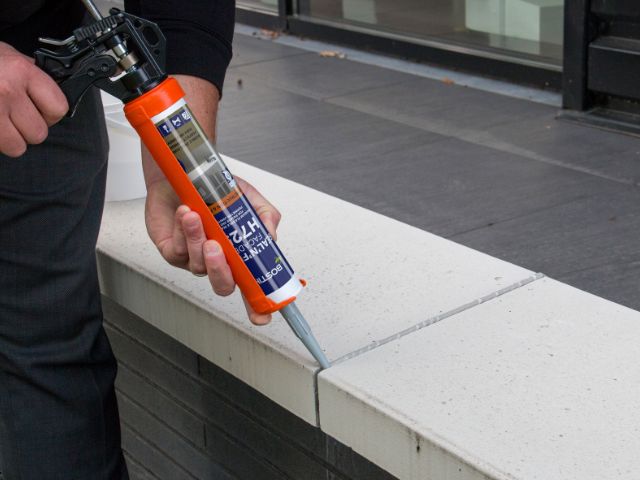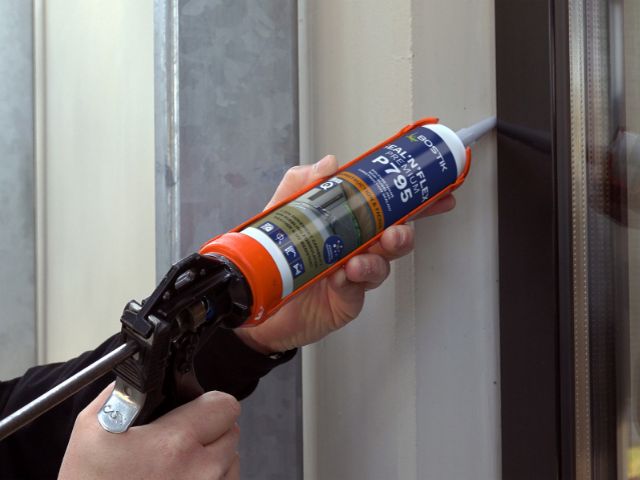
The best adhesive for natural stone depends on compatibility first. Products such as Bostik H980 HIGH TACK PREMIUM and H750 SEAL’N’BOND PREMIUM are formulated with non-staining technology to prevent chemical migration into porous materials. Once compatibility is secured, bond strength and environmental resistance determine long-term performance on exterior applications.
The challenge of bonding stone in construction
Stone varies in density, texture and porosity. These characteristics affect how adhesives interact with the surface. Smooth or polished types can resist adhesion, while porous stones may absorb moisture and stain during application. Heavy panels demand products with strong grip to hold without mechanical support. Uneven substrates or thermal movement also place stress on the bond. Incompatible adhesives can lead to bond failure or surface contamination over time.
What to look for in a stone adhesive
Compatibility with natural stone remains the primary requirement. H980 HIGH TACK PREMIUM and H750 SEAL’N’BOND PREMIUM are formulated to prevent staining phenomena caused by oil or plasticizer migration. Once cured, this type of staining cannot be corrected.
Mechanical performance defines suitability. H980 provides a tensile strength of 2.20 N/mm² and a Shore A hardness of 56. These values ensure stable positioning of heavier elements. H750 reaches a tensile strength of 4.0-4.1 N/mm² and an elongation at break of 400-500%. This elasticity enables the bond to accommodate movement in exterior environments.
Temperature resistance also matters in exposed areas. H980 performs from -40°C to +90°C. H750 extends up to +120°C with short-term exposure tolerance. Selection should match the expected site conditions.
On-site solutions: choosing the right product for each case
H980 HIGH TACK PREMIUM – For natural and porous stone
Bostik H980 HIGH TACK PREMIUM combines very high initial tack with a non-staining formulation. It bonds heavy stone without the need for mechanical support and performs well on porous substrates. This adhesive holds under moisture and weather stress, making it suitable for applications exposed to weather and moisture. It adheres without primer on most substrates, including slightly damp surfaces. This reduces preparation time and lowers the risk of staining visible finishes. H980 holds EC1 Plus 1 certification and supports projects working toward BREEAM 2 indoor air quality requirements.
H750 SEAL’N’BOND PREMIUM – For areas that require sealing and bonding
Bostik H750 SEAL’N’BOND PREMIUM functions as an all-round sealant and adhesive for elastic bonding and sealing. It works well in areas like kitchens or wet rooms, where joints need to stay sealed and secure. The formula cures into a flexible and durable bond, resists moisture, and offers a non-staining solution for natural stone. Its solvent-free and non-staining composition makes it reliable for sensitive or polished surfaces. The product is classified under EN 15651 3 for façade, glazing, sanitary and pedestrian applications, and holds EC1 Plus low-emission certification.
| 1 Emicode EC1 Plus | 2 BREEAM | 3 EN 15651 |
|---|---|---|
| Independent certification confirming very low VOC emissions. Used to demonstrate compliance with strict indoor air quality requirements. | Building Research Establishment Environmental Assessment Method. An international sustainability assessment scheme for buildings. Low-emission construction products may contribute to credits within a certified project. | European standard for sealants used in building construction. It classifies products according to application area and movement capability. |
Application tips to avoid failures
Apply the adhesive in controlled beads to ensure proper contact and curing. Follow these principles during application:
- Apply in vertical strips using a V-nozzle
- Leave space between beads to allow ventilation
- Avoid dot patterns that reduce effective bond area
- Ensure the substrate is sound and free from contamination
- Use a suitable cleaner where required
- Prime porous stone only when specified in the technical data sheet
- Respect the stated application temperature and curing time
Correct application helps protect the stone surface and supports long-term bond stability.
Why hybrid adhesives are becoming standard
Hybrid adhesives combine the performance of polyurethane with the weather resistance of silicone. They bond a wide range of materials without releasing harmful solvents or isocyanates. Their elasticity supports long-term durability, even under movement or exposure. These products align with low-emission standards and support environmental certifications like BREEAM. With fewer limitations on substrate types and application conditions, hybrid technology has become a practical choice for many construction tasks involving stone.
How environmental factors influence stone bonding
Environmental conditions such as temperature, humidity, and substrate quality play a key role in stone bonding performance. Low temperatures slow curing and reduce initial grab, which increases the risk of movement during installation. High humidity or moisture in porous stone can affect adhesion when surfaces lack proper preparation. Wind exposure or thermal movement places additional stress on bonded elements, which makes elasticity essential for long-term durability. An adhesive designed to resist weather and moisture under normal application conditions supports reliable performance over time. In variable site conditions, installers should follow the product’s application guidelines to ensure consistent results.
For full technical data, certification details and project guidance, consult the documentation available via Bostik Academy.
Related articles
Discover articles that explain, educate, and inspire for better constructions