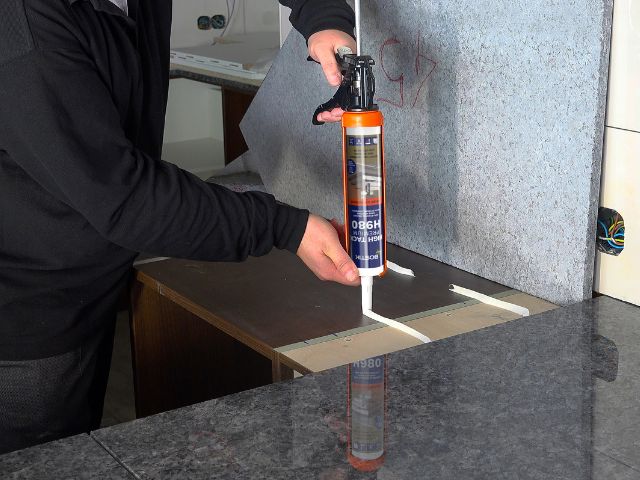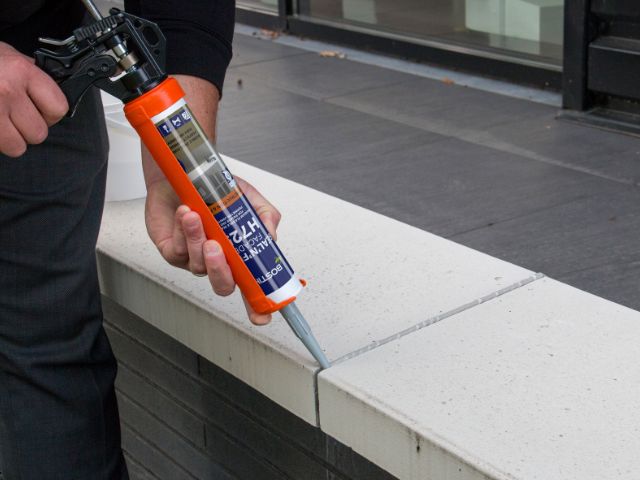
Joint sealing supports performance in civil and commercial construction. It preserves alignment where materials meet and move. Buildings respond to load and temperature. Without proper sealing, gaps allow moisture and strain to affect the structure. Sealants resist these conditions and help maintain function. In project design, joint sealing ensures durability, precision, and compliance with technical requirements.
Why joint sealing matters in structural design
Joints manage movement between structural elements. Concrete expands in warm conditions and contracts when temperatures drop. Façade components shift under wind pressure and thermal variation. These movements concentrate stress at connection lines, where material changes occur.
If left unsealed, joints become entry points for moisture. When joints remain unsealed, app water can enter the structure. This increases the risk of damage and reduces overall reliability over time. Damage often begins in these exposed zones and spreads into surrounding areas.
Sealing maintains cohesion between surfaces and shields vulnerable points. It helps distribute load and movement across the structure. In civil and commercial applications, joint sealing improves service life, limits surface deterioration, and supports regulatory performance criteria.
Designing joints for movement, performance and durability
Joint dimensions define how a structure responds to movement. Width and depth ratios must match the substrate, the sealant, and the expected displacement range. A narrow joint with limited depth may fail under expansion. A wide joint without correct shaping loses flexibility and breaks bond lines.
Backer rods shape the sealant profile and help define its movement range. They limit adhesion to two sides and control the depth of the applied material. This allows the sealant to stretch and compress without tearing or detaching. The choice of backer rod depends on the joint width, geometry, and the sealant's physical characteristics. A well-sized backing ensures uniform application and supports full curing.
Sealant performance also depends on material compatibility. Products must adhere to concrete, stone, or metal with minimal preparation. Polyurethane sealants offer distinct advantages depending on the environment. Some provide strong resistance to UV or chemical exposure. Others handle high joint movement or physical wear. The best results come from aligning sealant capabilities with the demands of the joint location and surrounding materials.
Vertical joint sealing: solution for façades
Vertical joints face stress from building movement, thermal variation, and environmental exposure. Sealing these joints maintains the outer skin of the structure and prevents failures along façades. Movement at these points must be absorbed without allowing air or water to pass through.
Bostik P795 SEAL'N'FLEX PREMIUM addresses these needs with a durable polyurethane formulation. It maintains permanent elasticity and adheres well to most common construction substrates, even on damp surfaces. It forms a tight seal that withstands water exposure and temperature cycles, with durable performance even under UV exposure. The sealant cures without bubbling, remains stable in damp conditions, and does not shrink. For most porous substrates such as concrete and mortar, it applies without a primer. Non-porous substrates may require Bostik Primer.
P795 supports joint movement up to 25% in line with ISO 116001 requirements for sealants used in joints exposed to repeated movements. It performs reliably in roofing applications and exterior construction joints subject to movement. Its resistance to deformation helps preserve the appearance and function of the joint. P795 meets ASTM C920² and EN 15651³ classifications of exterior construction joints.
| 1 ISO 11600 | 2 ASTM C920 | 3 EN 15651 |
|---|---|---|
| International classification standard for building sealants. It defines performance categories based on movement capability and modulus, such as 25LM or 25HM, following standardized laboratory testing. | American standard specification for elastomeric joint sealants. It classifies products by type, grade, class (movement capability) and intended use, and sets performance requirements for adhesion, durability and elasticity. | European standard for sealants used in building construction. It classifies products according to application area (e.g., façade, glazing, sanitary), environmental exposure (interior or exterior), climate suitability and movement capability. |
Horizontal joint sealing: ensuring durability under pressure
Horizontal joints take continuous pressure from traffic and environmental exposure. In these areas, sealant failure can lead to cracking and other surface issues. A suitable product maintains flexibility under stress and resists both mechanical and chemical wear.
Bostik P985 SEAL’N’FLEX SELF-LEVELING is built for these conditions. Its self-levelling formulation flows into place without tooling, creating a uniform seal across the joint. It bonds effectively to concrete and ceramic flooring surfaces and maintains its shape under compression and expansion. The product suits applications where slope remains below 4%.
P985 cures without bubbles and maintains flexibility in a wide temperature range. It tolerates contact with jet fuel, saltwater, and cleaning agents. These properties make it suitable for use in car parks, access ramps, outdoor decks, and tiled terraces. With movement capacity up to 35% (tested per ASTM C719), P985 meets the requirements of ASTM C920 for elastomeric joint sealants. The product meets ASTM and EN standards for external traffic areas.
Choosing the right product for your specification
Joint performance depends on precise matching between sealant properties and site conditions. Movement range, substrate type, surface exposure, and expected wear all influence product selection. A floor joint in a chemical zone requires different resistance than a vertical gap along a ventilated façade.
Sealants like P795 and P985 respond to specific roles in the structure. P795 suits vertical applications where elasticity and weather resistance matter most. P985 addresses horizontal joints where traffic, standing water, and chemical loads occur. Both products accommodate a range of joint widths and substrate types, with primer-free adhesion possible on many surfaces depending on porosity.
Specifications should include reference to movement class, application temperature, and substrate conditions. Certifications under ASTM and EN standards provide a benchmark for performance.
For detailed technical data, classification breakdowns and application guidance, consult the full documentation and resources available via Bostik Academy.
Related articles
Discover articles that explain, educate, and inspire for better constructions