A new floor on top of a wooden floor? Then it’s important to make sure that your floor is level.
Levelling over a wooden floor is a key step before installing a new floor covering. Uneven spots, gaps or slight misalignments can make it difficult to install new flooring over the existing surface.
Levelling ensures a stable and even base, whether you are installing parquet, vinyl or textile flooring. This guide explains how to approach levelling over a wooden floor, what materials to use, and what to focus on to achieve a long-lasting, professional result.
Two ways to level over a wooden floor
The best approach depends on the condition of the subfloor. Every wooden floor is different, so it is important to assess it carefully before choosing a method. Choosing between a self-levelling compound and doing an overlay floor depends on the condition of the wooden floor and the constraints on site.
Use overlay floor when subfloor shows some weakness
- The substrate has noticeable movement or flexibility
- The floor is difficult to stabilize completely
- A dry and faster installation is preferred
Use levelling compound when the subfloor is stable
- The boards are well fixed and stable
- Only minor unevenness needs correction
- A smooth, continuous surface is required
Making the right choice at this stage helps avoid issues during installation and ensures long-term performance.
Using an overlay system to manage movement
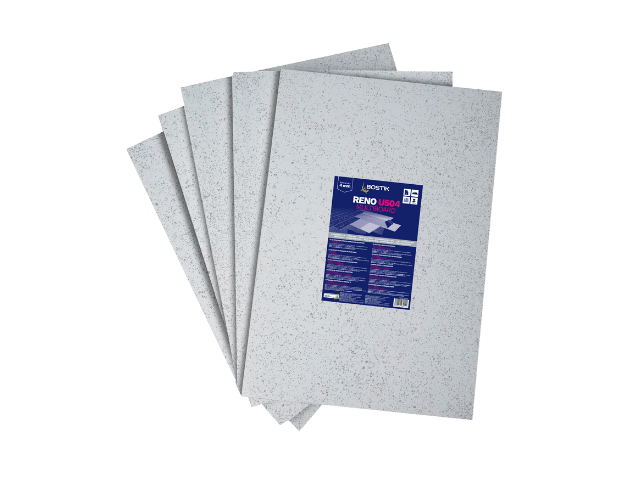
RENO U515 MULTIBOARD is a bonded decoupling and insulating polyester board designed for floor covering installation. It acts as an intermediate layer between the wooden substrate and the final floor.
This solution helps to:
- Reduce the impact of movement from the wooden floor
- Provide a stable base for installation
- Contribute to insulation performance
This method is particularly useful when the wooden floor shows significant movement or when a dry installation system is preferred. Final hard flooring such as ceramic tiles or parquet can be bonded directly over it. In the case of soft flooring installation, a levelling compound may still be applied on top to create a suitable surface.
Using a levelling compound for a smooth surface
Levelling compound is a cement and or gypsum-based liquid underlayment that fills imperfections and smooths uneven areas.
For wooden substrates, it is important to use a fibre-reinforced product specifically designed to absorb movement from the wooden substrate.
To achieve a reliable result:
- Precision matters: apply carefully and allow sufficient curing time
- Prevent leaks: to stop the compound from seeping through gaps or not bonding properly, use a primer or filler first
- Even application: a stable base ensures the levelling compound spreads evenly and produces a durable, professional finish
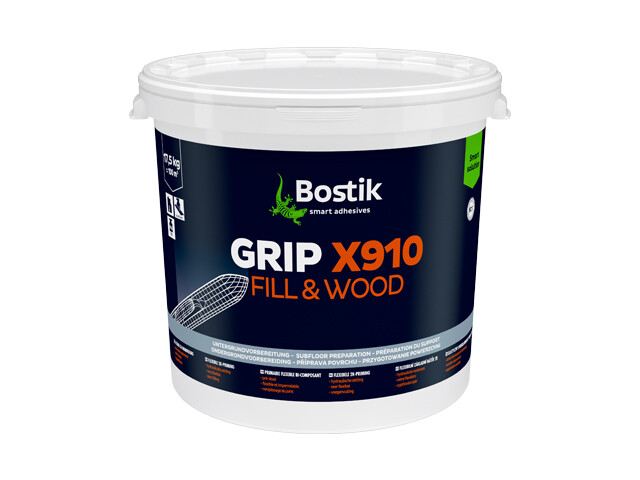
Products such as GRIP X910 FILL & WOOD help prepare the surface by filling joints and gaps, creating a fluid-tight base and improving adhesion.
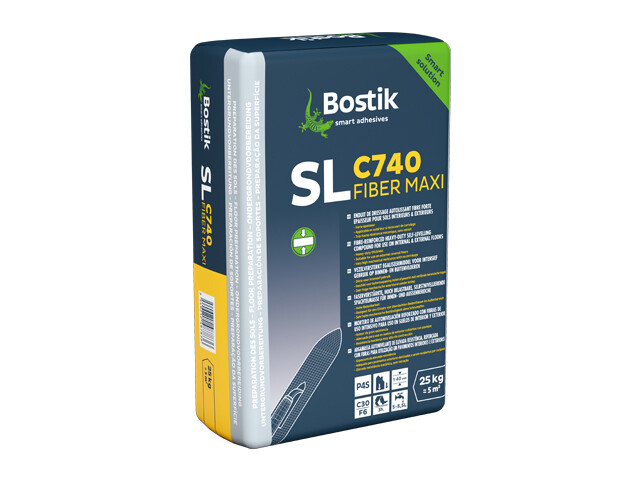
A fibre-reinforced levelling compound such as C740 FIBER MAXI can then be applied to create a smooth and even surface suitable for floor coverings.
What kind of subfloor?
There are two main types of wooden substrates:
Old parquet (planks format)
These floors need to be installed over joists to maintain ventilation.
Wooden boards
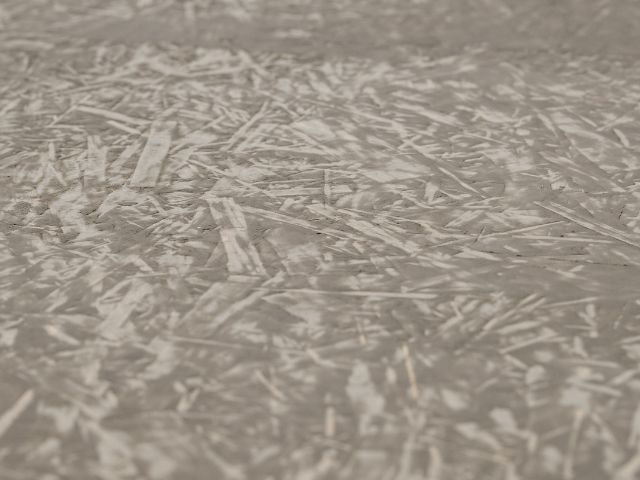
These include OSB, chipboard or plywood.
OSB
- Minimum grade 3 for light traffic and moisture resistance
- Grade 4 for higher traffic requirements
- Tongue and groove
- Thickness between 18 and 22 mm
Chipboard
- Classified P5 minimum (moisture resistant)
- Thickness between 19 and 22 mm
- Tongue and groove
Plywood
- Classified EN 636-2 minimum
- Thickness between 18 and 22 mm
- Tongue and groove
Preparing the floor
Proper preparation is key for a lasting result.
Remove protruding nails, replace damaged planks or boards, and secure loose boards by fixing them mechanically. Ensure the floor can support the additional load of the levelling system and final floor covering.
Sand the floor and clean thoroughly to remove varnish, paint and any contaminants.
Check that the surface is liquid-tight to prevent levelling compound from seeping through.
Priming and sealing the substrate
After preparation, prime the floor to improve levelling compound adhesion.
Joints, gaps and local defects should be treated using a suitable product such as GRIP X910 FILL & WOOD. This helps to:
- Fill joints and gaps
- Repair local defects
- Create a continuous and liquid-tight surface
Proper sealing prevents the levelling compound from seeping through the substrate and supports consistent adhesion during application.
Levelling the wooden floor with levelling compound
Once the substrate is prepared and sealed, the levelling compound can be applied.
The product is poured onto the surface and spread using appropriate tools such as a levelling rake or spreader. It flows to form a smooth and even layer.
- Apply continuously to avoid joints or inconsistencies
- Maintain controlled thickness
- Respect drying and curing times before installing the final floor covering
Using a fibre-reinforced product such as C740 FIBER MAXI helps maintain performance on wooden substrates that may still experience slight movement.
Using the right materials ensures precision and durability.
Related articles
Discover articles that explain, educate, and inspire for better constructions